
Case study: how an Eyelink belt eliminates downtime in an industrial bakery
Recurring stoppages on a baking line usually stem not from one big failure, but from the sum of small belt problems: slippage, mistracking and costly whole-belt replacements. We show how the Eyelink construction addresses each of them.
Starting point: typical baking-line pains
- Belt slippage on the drum and mistracking under load changes.
- The 'tunnel effect' - small products falling between belt layers.
- Long downtime when replacing the whole belt after local damage.
Solution: why Eyelink
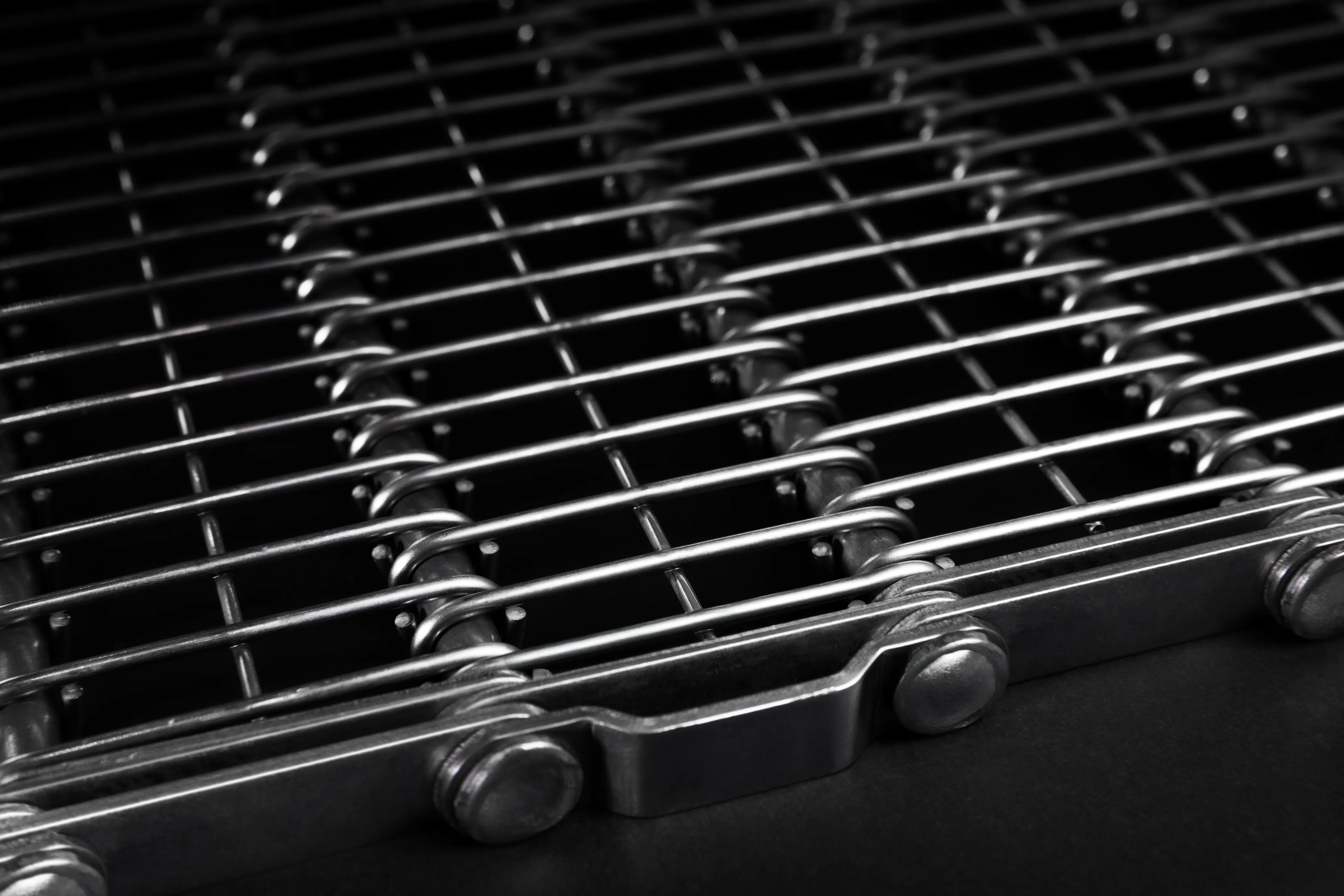
The Twentebelt Eyelink belt is driven by positive (form-fit) drive with sprockets directly on the eyes - this eliminates slippage and forces perfectly straight tracking regardless of load.
The single-level surface removes the tunnel effect, and the flat, stable surface gives an even bake with minimal marking. The modular construction lets you replace the damaged section instead of the whole belt.
Business effect (model)
Switching from friction drive to positive (form-fit) drive removes the most common cause of unplanned stoppages (tracking correction, tension adjustment). Modular repair shortens service downtime from a whole-belt change to replacing a few links.
Longer belt life in 24/7 operation and fewer bake complaints (stable surface) are the two biggest sources of savings.
What to prepare for selection
- Belt width and length and the drive type of the existing conveyor.
- Product type (size, sensitivity) and required drainage.
- Temperature range and cleaning procedure.
FAQ
Can an existing belt be replaced with Eyelink without rebuilding the conveyor?
Most often yes - we match the pitch and sprockets to the existing geometry. When switching from friction drive, sprockets must be provided; details are set based on the conveyor parameters.
Related Twentebelt belts
Worldwide market leader
Eyelink
Flat, stable surface with positive (form-fit) drive. The single-level weave eliminates the tunnel effect. Twentebelt is the worldwide leader in this construction.
Innovation in spirals
TwenteFlex™
Weld-free spiral with a bent rod - the end of cracking welds and sharp edges. Hygienic, easy to clean. Full Metal or POM/PA6 hybrid version.
Questions about this application?
Describe your process - we'll select a Twentebelt belt and prepare a quotation. Technical advice available.