
7 causes of premature metal conveyor belt wear (and how to eliminate them)
A metal conveyor belt can run for years - provided you eliminate a few recurring mistakes. Here are the seven most common causes of premature wear and how to prevent them.
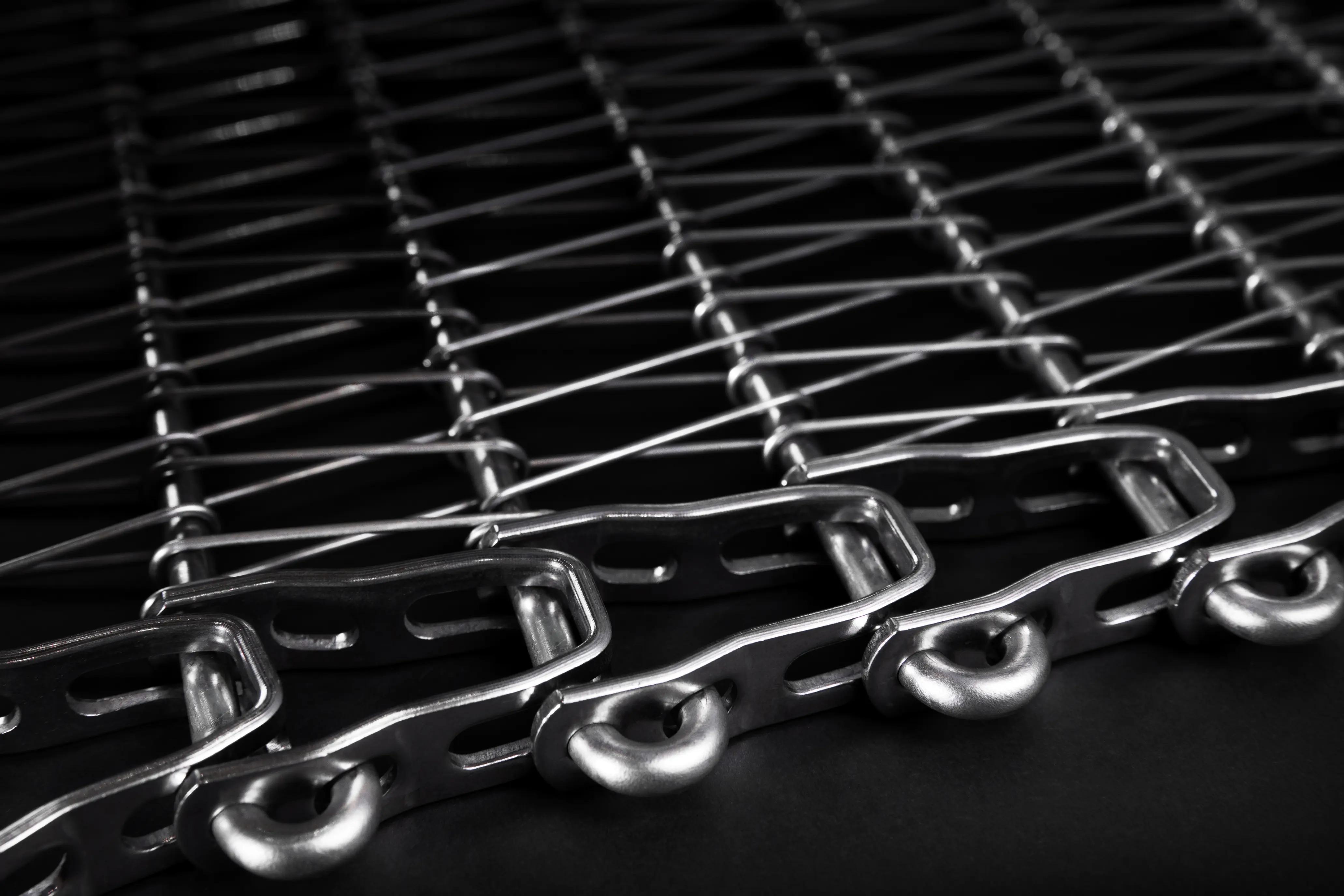
1. Cracking welds in a spiral belt
Classic welds in spirals crack, and sharp edges damage the cage rods. Solution: the TwenteFlex construction with a bent rod instead of welds - it eliminates the main causes of these failures and retains the full material strength.
2. Poor drive geometry and too-small sprockets
Too few teeth cause the 'polygon effect' and jerky tracking. Twentebelt recommends sprockets with at least 12 teeth; for shorter, lightly loaded belts a minimum of 8 is acceptable.
3. Friction drive instead of positive (form-fit) drive
Slippage on the drum means abrasion and mistracking. Where possible, use positive (form-fit) drive (Eyelink, Wire Mesh, GS) instead of friction.
4. Wrong steel for the medium
AISI 304 in a brine or acidic environment suffers pitting corrosion. Such processes require 316 - see our steel selection guide.
5. Wrong cleaning procedure for mixed materials
Citric acid corrodes carbon-steel (C-steel) side chains. Clean SS + C-steel combinations with steam or hot water and a suitable agent.
6. No slack zone and wrong tension
An Eyelink belt should run under light tension (you should be able to lift it with one finger). Too much tension and no take-up zone accelerate wear and make the belt climb the drive.
7. Poor support and guidance
No support every 250-300 mm (spiral belts) or wrong guide configuration causes rod bending and uneven wear. Guides should correct tracking, not permanently steer the belt.
Related Twentebelt belts
Innovation in spirals
TwenteFlex™
Weld-free spiral with a bent rod - the end of cracking welds and sharp edges. Hygienic, easy to clean. Full Metal or POM/PA6 hybrid version.
Worldwide market leader
Eyelink
Flat, stable surface with positive (form-fit) drive. The single-level weave eliminates the tunnel effect. Twentebelt is the worldwide leader in this construction.
The mother of all metal belts
Spiral Woven
The most versatile weave - from heavy, hot products to fine goods. Rod Reinforced type up to +1200 °C. Perfectly round edge = clean transfer.
Questions about this application?
Describe your process - we'll select a Twentebelt belt and prepare a quotation. Technical advice available.