
Positive (form-fit) vs. friction drive in thermal processes - why a metal belt should not slip
In thermal processes the friction coefficient between belt and drum changes with temperature and moisture. A friction drive set up 'cold' can slip in a hot or wet environment. Hence the advantage of positive (form-fit) drive.
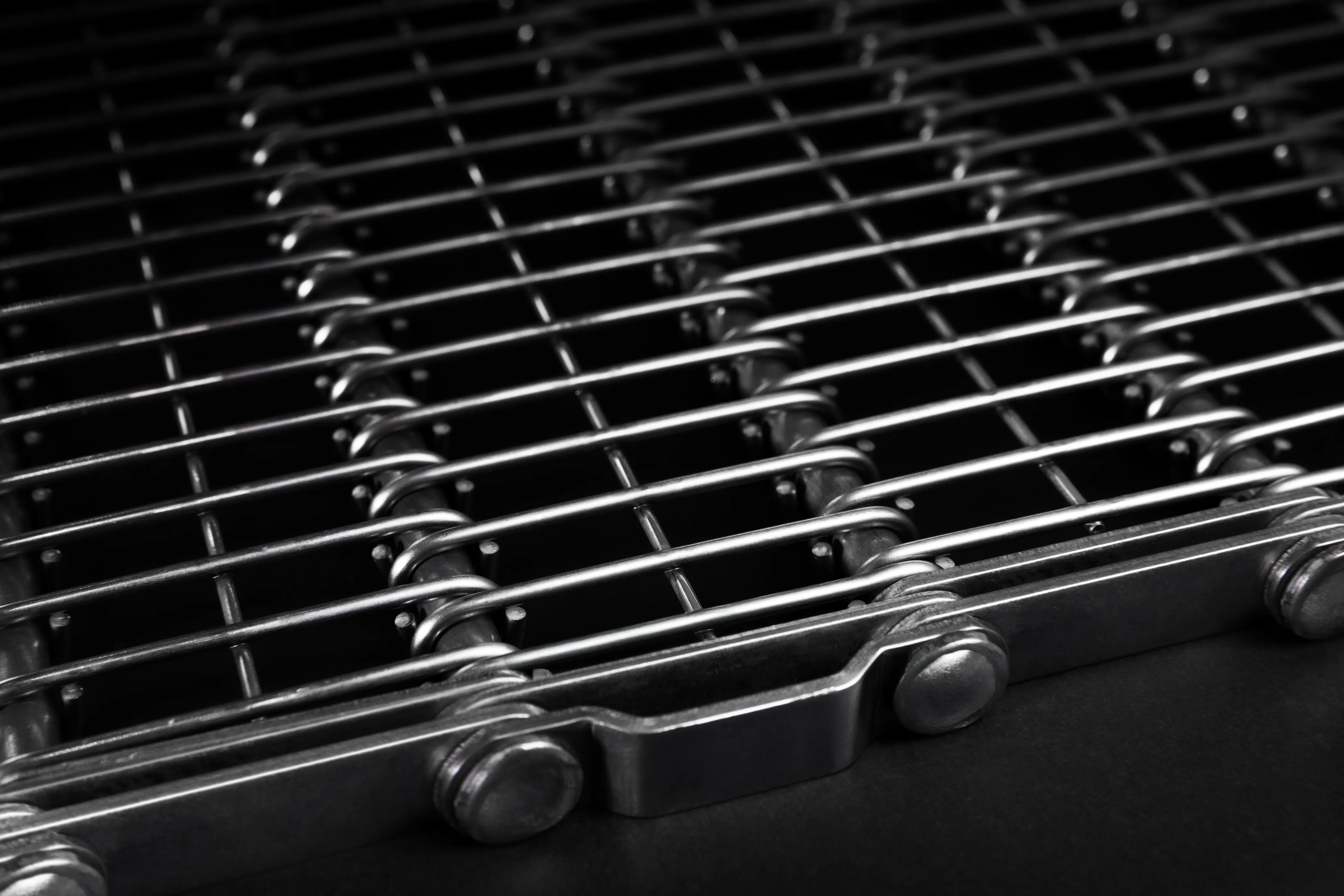
How positive (form-fit) drive works
In positive (form-fit) drive, sprockets engage directly with the belt structure (Eyelink eyes, Wire Mesh openings, GS crimped wires). There is no slippage - belt speed is unambiguously set by the sprocket, regardless of temperature and moisture.
Why friction fails in heat and moisture
In friction drive (e.g. low-tension in spiral towers) the force is transmitted by friction between belt and cage, and its coefficient depends on conditions: product, ice, heat, moisture. Hence the need for precise cage overdrive (usually 6-10% per tier) and regular cleaning.
When friction is still the choice
Friction drive (low tension) is a decades-proven technology in spiral towers - simple and cheap. TwenteFlex supports both low-tension and inside direct drive (IDD), so you can start with friction and later perform a cheap retrofit to direct drive for more stable tension.
Rule of thumb
- Ovens, tunnels, washers, small-part transport → positive (form-fit) drive (Eyelink/Wire Mesh/GS).
- Spiral towers → low-tension or direct drive (TwenteFlex / TwenteSideFlex).
- Large widths and heavy parts → sprockets + rollers/tube drum.
Related Twentebelt belts
Worldwide market leader
Eyelink
Flat, stable surface with positive (form-fit) drive. The single-level weave eliminates the tunnel effect. Twentebelt is the worldwide leader in this construction.
Maximum flow
Wire Mesh
Large openings and minimal product contact. Small turning radius = excellent transfer. FDA / GMP / EC 1935/2004 compliant.
Innovation in spirals
TwenteFlex™
Weld-free spiral with a bent rod - the end of cracking welds and sharp edges. Hygienic, easy to clean. Full Metal or POM/PA6 hybrid version.
Questions about this application?
Describe your process - we'll select a Twentebelt belt and prepare a quotation. Technical advice available.