
Selecting steel for a metal belt: when 304 is enough, and when 316 or a heat-resistant alloy is required
Belt material is the most common cause of premature replacement - either you overpay for an alloy you don't need, or you save and the belt corrodes. Here's how to choose the steel grade in Twentebelt belts.
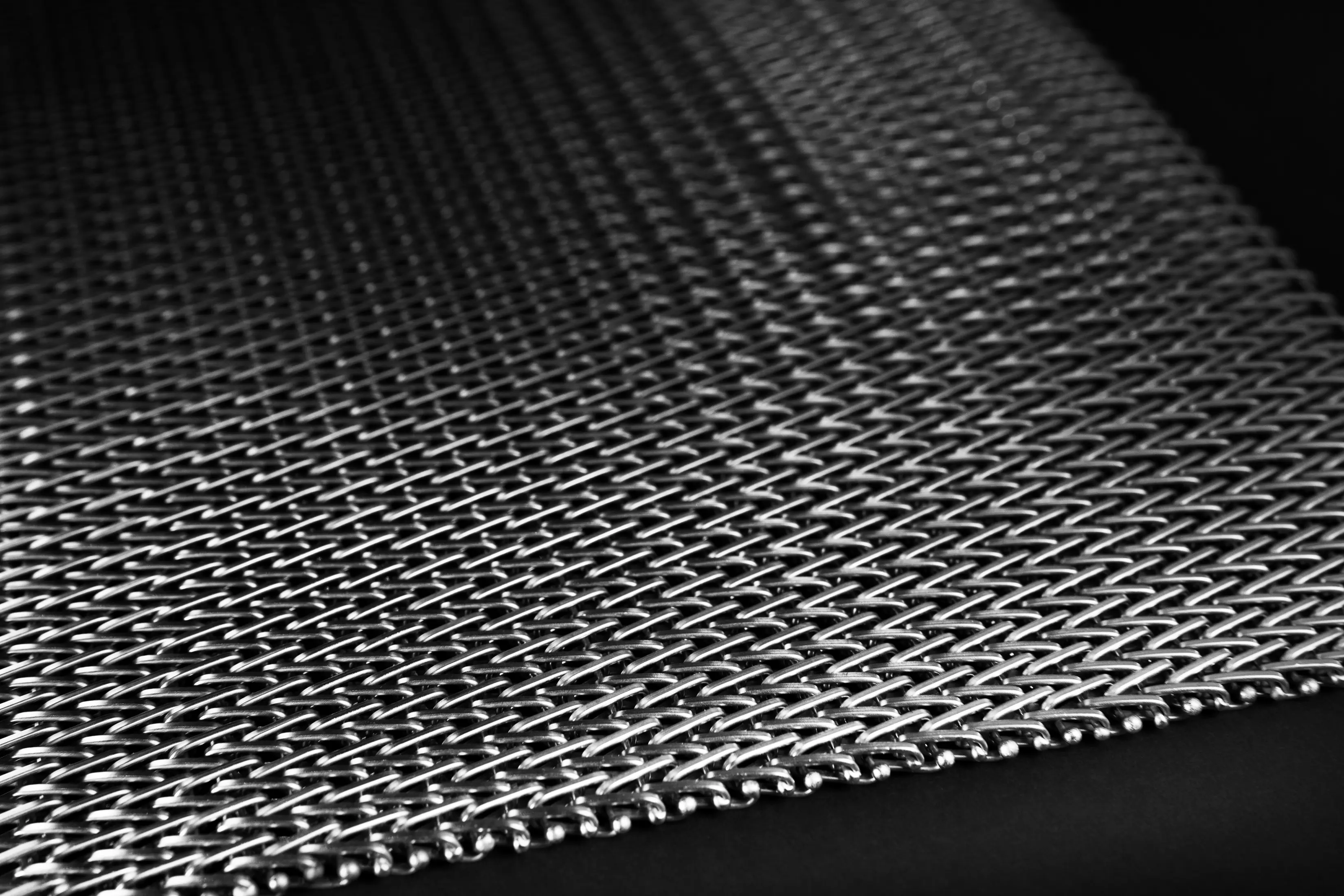
AISI 302 / 304 - the standard for most processes
302 and 304 steel are the first choice for dry thermal processes and typical food without aggressive media. In Twentebelt Eyelink and Wire Mesh belts, 304 works from -80 to +350 °C and is food-contact approved.
AISI 316 - when chlorine, salt or acids appear
The molybdenum addition in 316 significantly increases pitting-corrosion resistance. It's the right choice for cleaning with aggressive agents, contact with brine, marinades, acidic products and in chemical and pharmaceutical environments.
Rule of thumb: if the process involves chloride (salt) or low pH, assume 316 - the belt price difference is small against the cost of downtime and replacing a corroded belt.
Heat-resistant alloys - above +500…+600 °C
For the highest temperatures (glass furnaces, heat treatment, sintering), Spiral Woven balanced weaves are used, including the Rod Reinforced (RR) type working up to +1200 °C, made of heat-resistant alloys.
Here durability depends not only on peak temperature, but also on the process atmosphere (oxidising/reducing) and heating cyclicity - so material selection is discussed individually.
Watch out for mixed materials
Combining a stainless-steel belt with carbon-steel chains requires a separate cleaning procedure (steam/hot water, no citric acid, which corrodes carbon steel). This is a common source of 'the belt is rusting' complaints that actually concern the C-steel components.
FAQ
Is it always worth choosing 316 'just in case'?
No. In dry thermal processes 304 has comparable durability and is cheaper. 316 only has the edge where there's a risk of pitting corrosion (chlorides, acids, aggressive cleaning).
Related Twentebelt belts
Worldwide market leader
Eyelink
Flat, stable surface with positive (form-fit) drive. The single-level weave eliminates the tunnel effect. Twentebelt is the worldwide leader in this construction.
Maximum flow
Wire Mesh
Large openings and minimal product contact. Small turning radius = excellent transfer. FDA / GMP / EC 1935/2004 compliant.
The mother of all metal belts
Spiral Woven
The most versatile weave - from heavy, hot products to fine goods. Rod Reinforced type up to +1200 °C. Perfectly round edge = clean transfer.
Questions about this application?
Describe your process - we'll select a Twentebelt belt and prepare a quotation. Technical advice available.